INDUSTRIES
AI for E-commerce That Scales Operations Without Scaling Headcount
You've got 5,000 SKUs and three people writing product descriptions. Your support inbox has 200 unread tickets, half of which are "where's my order?" Your marketing team is spending Monday mornings building the same email segments they built last week. And your inventory planner is staring at a spreadsheet trying to guess how much to reorder based on last year's numbers and a gut feeling.
This is the scaling wall every e-commerce brand hits. Revenue grows, but so does the operational load — and headcount can't keep up. You hire more support agents, more content writers, more marketing coordinators. Each new hire takes weeks to train and months to become productive. Meanwhile, your competitors with leaner teams are moving faster because they automated this stuff six months ago.
AI automation isn't about replacing your team. It's about making your existing team dangerous. The support rep who was answering "where's my order?" 40 times a day now handles complex issues that actually need a human. The content writer who was grinding out product descriptions now works on brand campaigns. The marketer who was manually segmenting email lists now designs strategy while the system handles execution.
Good Smart Idea builds AI automation systems for e-commerce businesses. We connect to your existing platform — Shopify, WooCommerce, BigCommerce, whatever you're on — and automate the repetitive operations that bottleneck growth. Product content, customer support, marketing, and inventory intelligence. Built, deployed, and handed off running.
The Scaling Wall Every E-commerce Brand Hits
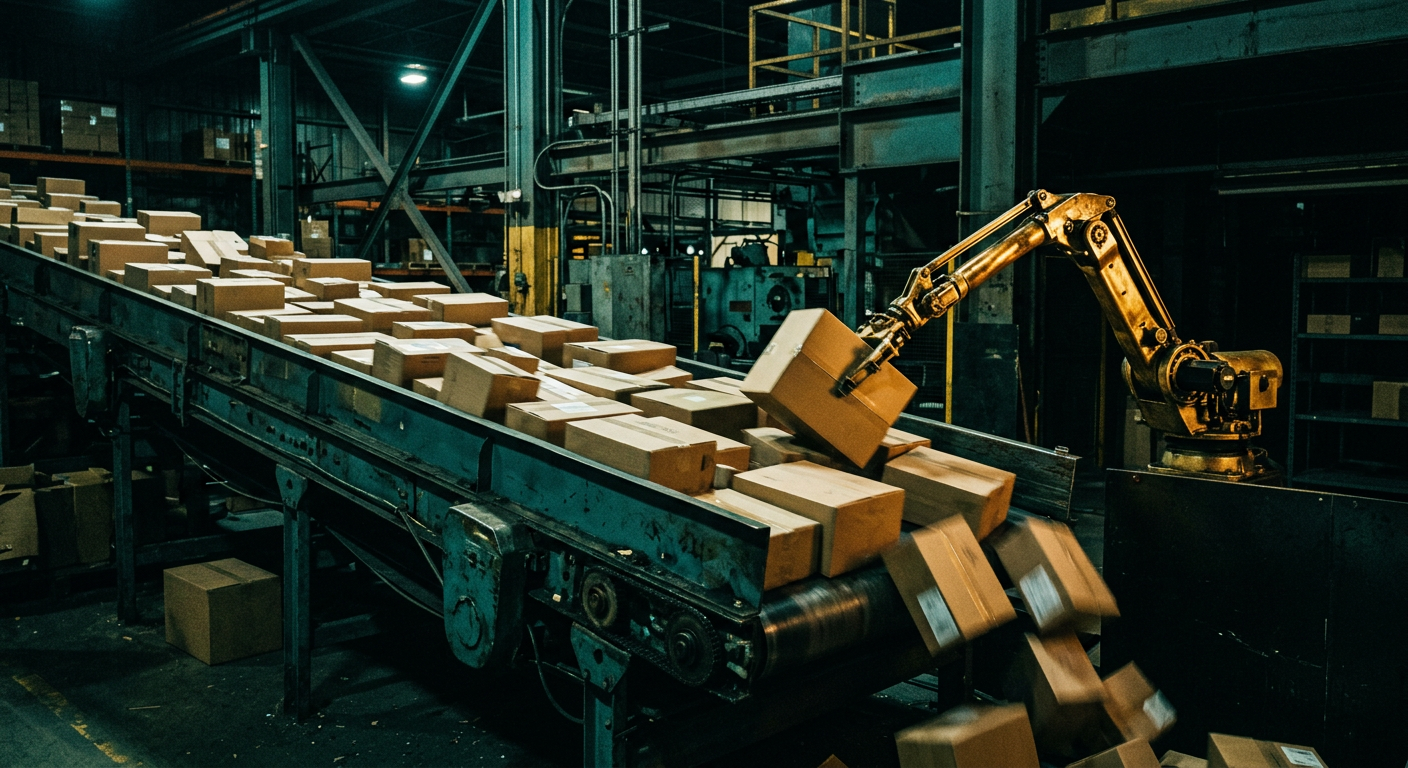
Growth is supposed to be the goal. But in e-commerce, growth brings operational complexity that scales faster than revenue. Every new product needs descriptions, images, and SEO copy. Every new customer creates support tickets. Every new channel requires marketing content. The work multiplies. Your team doesn't.
Support teams are the first to feel it. The average e-commerce support team handles hundreds of tickets daily, and 60–70% of those tickets are repetitive, answerable questions — order status, shipping timelines, return policies, product availability. Your best support reps are spending their days on questions a well-configured bot could handle in seconds.
Content is the second bottleneck. You need product descriptions for every SKU, category pages for SEO, email campaigns for every segment, and ad creative for every platform. Brands with 1,000+ SKUs are generating 10,000+ pieces of content per year just to keep product pages current. That's not sustainable with a three-person content team.
Then there's the data problem. Inventory decisions, pricing adjustments, and marketing spend allocation all depend on data analysis that most teams do manually — or don't do at all. The brands that win aren't guessing. They're using systems that process data continuously and surface decisions, not dashboards.

What We Automate for E-commerce Brands
We connect to your existing stack — Shopify, WooCommerce, BigCommerce, custom headless builds, Klaviyo, Gorgias, whatever you're running. The automation layer sits on top of your current tools and handles the workflows that eat your team's time.
Everything we build integrates via API. No platform migrations. No proprietary lock-in. The system works with what you already have and fills the gaps between tools that don't talk to each other. We also work with SaaS companies and real estate businesses using the same integration-first approach.
Product Content at Scale
- →
SKU-level descriptions generated from product specs, competitor analysis, and your brand voice. One product or ten thousand — the quality stays consistent and the output stays fast.
- →
A+ content and enhanced listings for Amazon, Shopify, and marketplace platforms. AI creates comparison charts, feature highlights, and lifestyle copy that drives conversion.
- →
SEO product pages optimized for search intent, not just keywords. Each page targets specific buyer queries with structured content that Google rewards with rankings.
Customer Support Automation
- →
Order status and tracking — the most common support ticket, handled instantly. AI pulls real-time data from your fulfillment system and gives customers exactly what they need without waiting.
- →
Returns and exchanges processed automatically based on your policies. AI walks customers through the return flow, generates labels, and updates your system without a human touching the ticket.
- →
Pre-sale questions about sizing, compatibility, and product differences answered from your catalog data. The AI knows your products better than a new hire would in their first three months.
Marketing Personalization
- →
Email sequence automation that goes beyond basic personalization. AI segments by behavior, purchase history, and browsing patterns, then writes email content that matches each segment's interests.
- →
Product recommendation engines that actually improve over time. Not just "customers also bought" — AI models that understand affinity patterns, seasonal shifts, and margin optimization.
- →
Ad copy and creative testing — AI generates variations for Meta, Google, and TikTok ads, tests performance signals, and surfaces winners without your team manually building every variant.
Inventory & Operations
- →
Demand forecasting that accounts for seasonality, promotions, market trends, and historical velocity. Reduce stockouts and overstock simultaneously — the two problems that silently destroy e-commerce margins.
- →
Pricing intelligence that monitors competitor pricing, marketplace dynamics, and margin thresholds. AI suggests adjustments based on real data, not gut feel.
- →
Catalog management — automatic categorization, attribute extraction, and data normalization across channels. Your product data stays clean without someone manually auditing spreadsheets.

What AI Delivers for E-commerce
The impact shows up in operational metrics within weeks, not months. AI-powered product content generation reduces time-to-publish by 80–90% — what took a writer 30 minutes per description takes seconds, with consistent quality and SEO optimization across every SKU.
On the support side, automated ticket resolution handles 50–70% of inbound volume without human intervention. Response times drop from hours to seconds for common questions. Your support team shrinks in workload, not headcount — they handle fewer tickets but higher-quality interactions.
Marketing automation drives the revenue side. Personalized email campaigns powered by AI see 2–3x higher click-through rates compared to generic blasts. Product recommendations drive 10–30% of total revenue for brands that implement them correctly.
We track every metric. See detailed case outcomes here.
Solutions for E-commerce Brands
Each solution maps to a specific e-commerce challenge. We configure them for your platform, your product catalog, and your customer base.

AI Automation vs. Hiring More People
The default response to operational bottlenecks is "hire more." Here's why that math stops working at scale:
| Challenge | Hiring Approach | AI Automation |
|---|---|---|
| 5,000 product descriptions | 3 writers, 6 months | AI pipeline, 2 weeks |
| 200 daily support tickets | 5 agents at $40K each | Bot handles 70%, 2 agents for escalations |
| Weekly email campaigns | Marketing coordinator, $55K/yr | AI writes, segments, and sends automatically |
| Inventory reorder decisions | Spreadsheet + gut feel | Demand model with real-time signals |
| Scale to 2x volume | Double the team | Same team, same systems, more throughput |
| Time to productivity | 3-6 months per hire | 1-4 weeks to deploy |
Explore how we apply this same approach to healthcare, law firms, and contractors. Or see our consulting approach.
Frequently Asked Questions
Common questions from e-commerce founders, ops leads, and marketing teams about AI automation. If yours isn't here, ask us directly.
How does AI help e-commerce businesses scale?+
Can AI write product descriptions that actually convert?+
How much does e-commerce AI automation cost?+
Does AI automation work with Shopify, WooCommerce, and other platforms?+
Will AI customer support hurt my brand experience?+
How quickly can we see results from e-commerce AI?+
Stop Hiring for Problems AI Can Solve
Your next hire won't fix the scaling wall. A system will. The audit identifies where your biggest operational bottlenecks are and what AI can take off your plate — with a realistic timeline and cost estimate. No commitment beyond the conversation.
Related solutions
See all solutions →Industries we serve
See all industries →Tools we use here
See full tech stack →Discover what AI can actually do for your business.
Free AI diagnostic. We audit your workflows, identify opportunities, and show you a clear path to results — not a sales pitch.
30 minutes. No contracts. No commitments.