AI for Restaurants: One System, Three Problems Solved

Quick Summary
Most restaurants juggle 4-6 separate software systems, draining staff time with constant context switching. Learn how a unified AI platform eliminates fragmenta
AI for Restaurants: One System, Three Problems Solved
Different websites and systems for restaurants use many different platforms, applications or services. It’s not unusual for a website and backend system for example to be using five different services or platforms for different aspects like reservation systems, table allocation, staff rosters, online ordering and restaurant administration. Here’s the question, how much are you paying for them, and how much more valuable are the staff hours they chew up every single day? It’s not the cost of the software per month that’s the tax that restaurants pay; it’s the number of context switches that their staff perform all day every day, where instead of working with a customer they’re juggling different open windows or switching between a dozen different software applications.

 Claude AI.svg" alt="claude logo" style="height:32px;width:auto;display:inline-block;margin:0 8px;filter:grayscale(50%) brightness(1.5);opacity:0.7;" title="">


Creating a harmonious, operational restaurant environment using software, technologies and applications can be created with the right level of knowledge and planning for what’s required and possible for all the varied elements of today’s restaurants operations. Starting with understanding how a single Artificial Intelligence platform (server) might be required versus how a large collection of disparate Point Of Sale applications and tools work for restaurant operations today.
If you’re already thinking about what this could look like for your venue, talk to our team — we help restaurants make exactly this kind of transition.
TL;DR
- Most restaurants are running between 4 to 6 standalone points of sale and the major cost isn’t the price of the system, but the staff time invested into managing these disparate systems.
- All information for a guest is stored in a single database record, and that record is used to power a booking engine, respond to reviews and post to social media. The entire system is one, unified application and all of the features learn from and feed back into each other.
- A Guest AI Booking Assistant can resolve up to 79.3% of guest inquiries in real time — in less than 3 minutes, 24/7, in 25 languages, and at 2am when your host is asleep.
The Real Problem Isn’t Technology — It’s Fragmentation
I want to challenge you with a quick audit of the technology you’re currently using to run your restaurant business. Here are a few questions to ask: Are you using OpenTable or Resy for your online reservation platform? Is your Google Business Profile up to date with the latest reviews from customers? Do you use a tool to schedule posts on social media? Are you using a point of sale system that allows for easy card transactions? Do you have an email marketing platform that helps keep customers in the loop about the latest developments at your restaurant? And perhaps most recently, did you launch a loyalty app a half a year ago, with features that are still not fully integrated? If so, you’re not alone! Most modern restaurants like yours are using a minimum of six apps to run the business. For each one, there’s at least one pair of username and password to remember, not to mention making sure they’re each used to the right degree or at the right time. Each one of these has its own data source too. Each one is stored in isolation from the others. There’s no useful integration with the business workflows of the restaurant. Is this you?
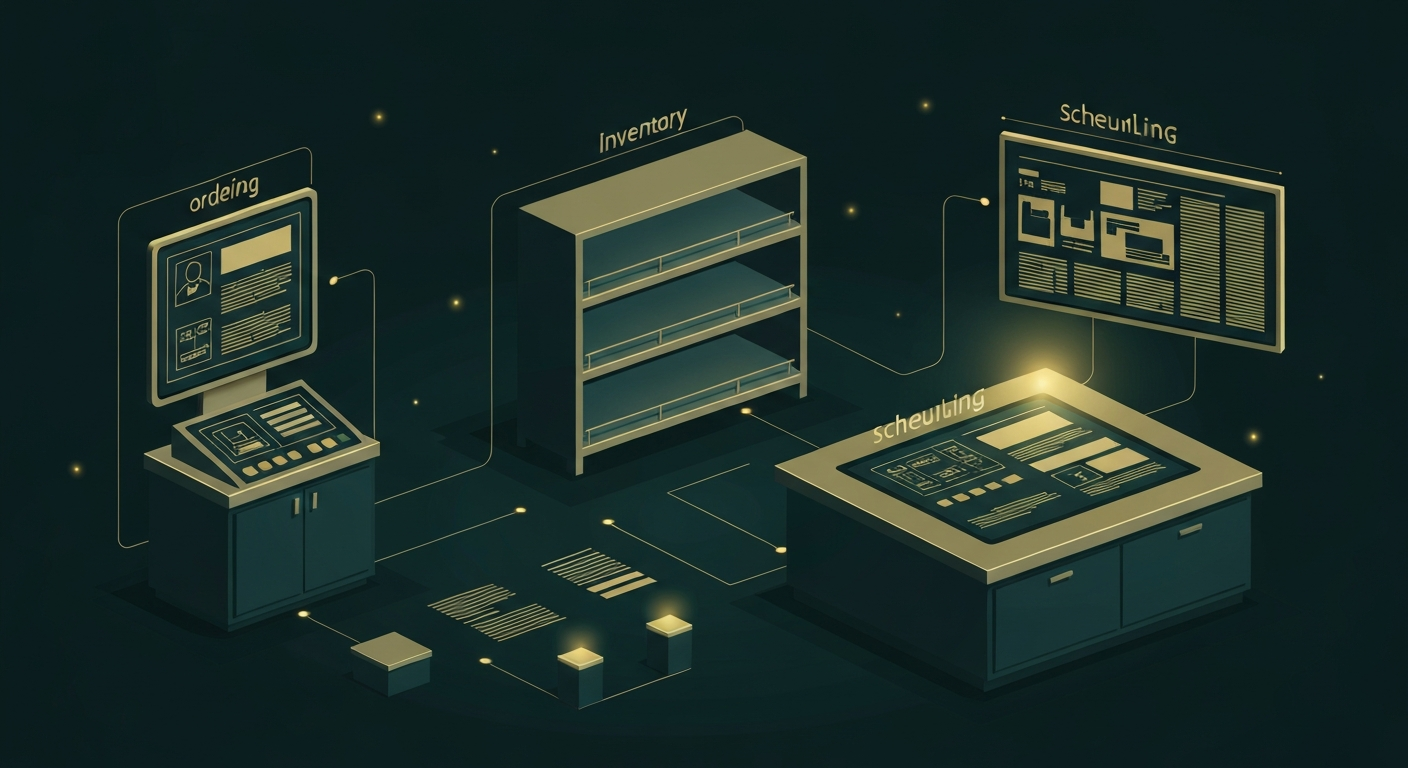
The vendors will say this is all fine because they have “integrations”. What they omit to mention is the difference between “integrations” and “unification”. Data may be moved between systems as a result of “integrations” (and you might even be fortunate in having it both ways between systems) but that doesn’t mean the systems are unified. Unification occurs when systems share a common data model for the data and work on the same version of the guest record in real time. That’s a very different proposition.
The cost of having all of these disparate systems is that staff has to be aware of them all. So your GM using OpenTable for online dining reservations, Yelp for online reviews and Hootsuite for social media management all have to switch constantly from one platform to another all day long in order to be effective in their roles. This “task-switching cost” is small and easy to underestimate — like the annoyance of bug bites — but is clearly present and detracting. Are your hosts effective at responding to the 3 different direct messages they have received on Facebook, Twitter and text, while also efficiently seating a table of 6 guests? Nope.
The premise of this post is that “AI for restaurants” isn’t about doing something dramatically different in a restaurant (like replacing the host with a computer), but about filling in gaps so that technology supports each other in meaningful ways. So that, when we think of technology in a restaurant we have an accumulation effect rather than trying to replace a particular function. So when a reservation comes in through a web site and then shows up as a review in a review management system, which can then start to provide analytics to the restaurant which are then used in social media which then links to a CRM for further actions — then something very special is happening. We’re saving time, but we’re also becoming much more customer intelligent in real time.
That’s what we’re going to break down.
What a Unified Restaurant AI System Actually Does
A brief look at the composition of the system will likely turn out to be useful when we examine these three functions in isolation. Now is as good a time as any.
A point solution is a tool that does one thing. A reservation chatbot that books tables is a point solution. A review response generator is a point solution. A social media scheduler with AI caption suggestions is a point solution. Each of these tools is genuinely useful. None of them on their own will change your restaurant’s operations in a meaningful way.
Ready to automate this?
GSI builds bespoke AI solutions for small businesses. Get a free consultation →
A restaurant unified by an AI system with a common guest database is very different from many different applications with separate databases of customer information. Every day every one of those applications receives and records individual “events” related to that customer’s dining experience: reservation requests, comments about the food, responses to social media campaigns, reviews, etc. These individual events and records — which exist only at a single point in time — never really amount to anything. Nothing “sticks.” None of the information records relating to a given customer resides in a place where it can be meaningfully aggregated to form a coherent view of who the customer is and how they behave. A unified system changes all that. Every one of the events or records is written to a single database, a single customer profile, which accumulates and deepens information over time.
The system knows that a particular table has always ordered the tasting menu on every other Thursday, and that it also always shows up on the 4th Thursday, because this table of 5 has always reserved the same large table. This system knows that the four-star review about the noise was written a year ago and the customer hasn’t been back since, because maybe the music isn’t any good at helping to solve the acoustics problem in the dining room. These are the kinds of things that can influence the dining staff’s actions in real time — things that aren’t easy to obtain from the disparate point solutions and silos of customer data that currently constitute a restaurant’s IT infrastructure.
The Three Core Functions
So why these three features? The answer is because these three features were by far the most common interaction between a guest and the restaurant and therefore are also the three that produce the most data. They’re also the three that take up the most human hours to administer and are thus a great place to automate without negatively impacting the overall guest experience. AI technology can now effectively perform these three tasks reliably and safely so that valued staff are free to provide the direct service and intimate interactions that make a memorable experience.
These core operations have something in common: the information they handle becomes more valuable as it compounds.
- Your reservation data tells you who’s coming and when, which then impacts the timing of your social media posts, as well as your email and message communications.
- Review data shows what your guests are saying and is often referenced when creating social media updates as well as an indicator of potential issues within the guest experience.
- Social engagement insights show what’s actually being liked, commented and shared — and can be used to personalize promotions and reservation offers to guests for optimal results.
You need to run all three from the same system. These are designed to work in a reinforcing loop that not only enhances your dataset, but also improves your interactions with your guests over time.
Automating Reservations: Beyond the Booking Form
Restaurants normally do this: customers click “Reserve a Table” and are then forwarded to a third-party table reservation widget or application. They fill out the reservation form, receive a confirmation email and often an SMS that acknowledges their reservation. Not much happens in between. This procedure does the job, but there’s so much room for improvement between each step of the process.
Modern AI booking assistants do something fundamentally new. Where an old form would take a booking, an AI booking assistant has a conversation. So in your menu of questions that your reception staff might ask — “Do you have a private dining room that will fit 12 people?”, “Does the kitchen stay open until 9:30 on Fridays?”, “Can we accommodate a severe shellfish allergy?” — the AI booking assistant can ask and answer these at the same time as filling in the form with the booking details. This is what makes an assistant not just a form.
24/7 Availability: The Conversion Argument
You may have a longer booking window than you realize. AI-powered chatbots can manage bookings and menus 24/7 on your website and social media without any human resources. There are late night bookers who are planning ahead and wanting to book a table for the weekend.
When do you decide where to go for Saturday dinner? On a Tuesday morning? Hardly. More than likely it’ll be Wednesday night, half listening to the TV and a few hasty swipes on the screen in an attempt to find a table and decide where to go. And that’s when your reservation system has lost the booking to the restaurant two doors down that has a decent booking system and can get back with a helpful bot response in under one minute.
Context-Aware Resolution: The Quality Argument
In theory, there should be few restaurants that can’t make at least modest use of a smart AI-based booking system. In even the smallest venue, there’s demand — be it a walk-in or a small group. The problem has been, though, that demand alone doesn’t guarantee success. Smart assistant technology is very effective at answering a relatively simple set of standard questions, but has historically fallen apart when there’s even a shade of unpredictability — when the guest deviates from the expected script. A unified AI system, drawing on a rich guest history and a live data model, is far better equipped to handle those edge cases gracefully, escalating to a human only when genuinely necessary.
Want to see what this looks like for your restaurant?
We’d love to walk you through a real-world implementation. Book a free consultation with GSI →